

Create
1
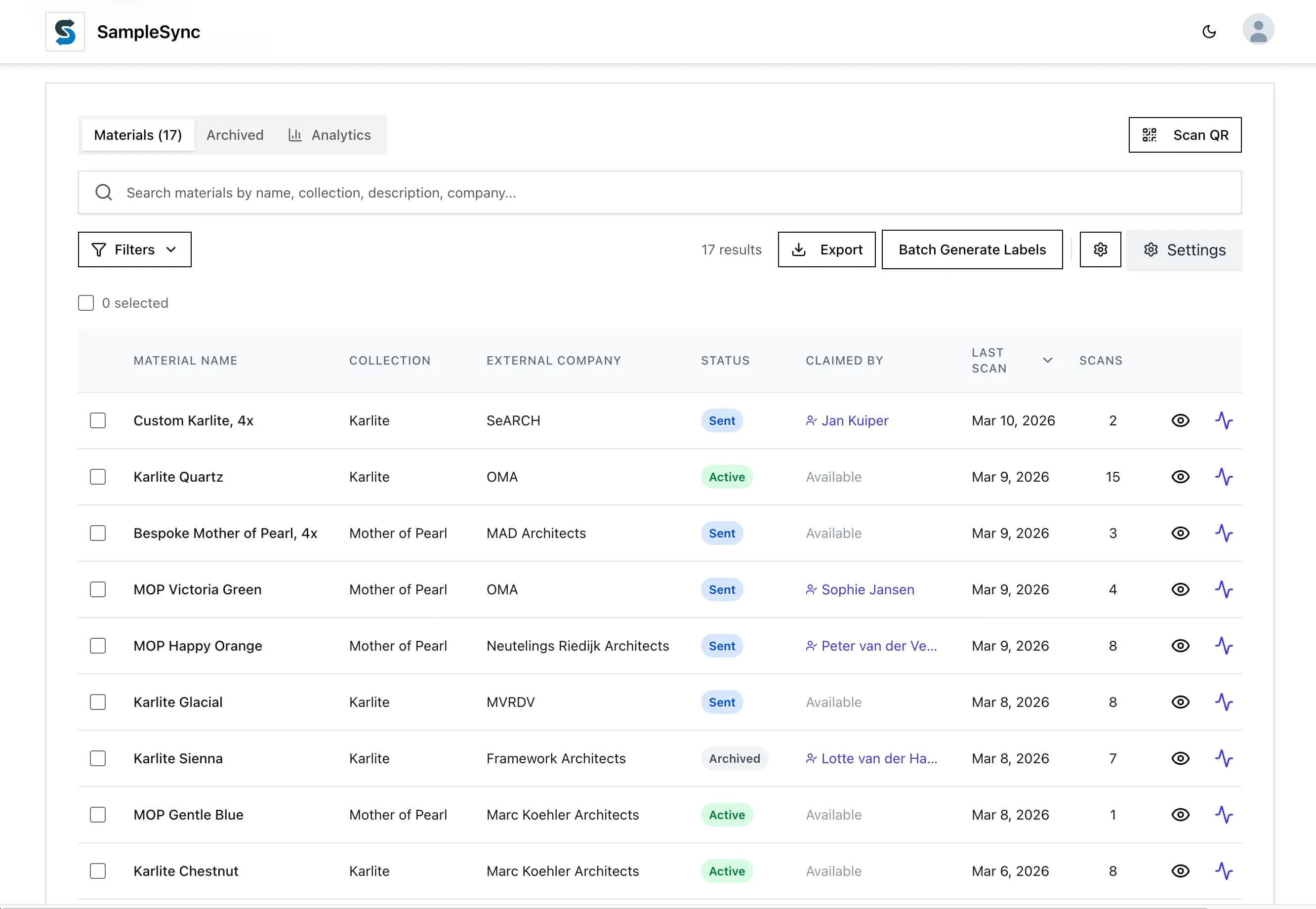
Build the passport.
Add specs, images, render textures, PDFs: whatever your customers need. Each material gets its own branded page. Takes two minutes.
Every sample should move a project forward.
You send samples out and the trail goes cold. SampleSync gives each one a QR code that opens specs, textures, certifications, and a direct contact route. If someone wants the full passport, they register first. You see who engaged, which firm they are from, and when it is actually worth following up.
Built for material teams who need a better follow-up signal without turning the sample programme into a CRM project.
Live passport preview
Who it's for
At that volume, a spreadsheet stops telling you which samples are still in play.
See who scanned what, which firm they're from, and when it's worth following up.
SampleSync tracks sample engagement and nothing else. No pipelines or custom fields.
Turn sample scans into qualified conversations. Know when to follow up and when to wait.
What changes
The QR on every physical sample opens a branded page you control: spec sheets, textures, certifications, CAD files. Every scan, rescan, and contact request gets logged, so by the time someone calls you, you already know they've been looking for three weeks.
Dashboard Preview
When someone fills out the contact form, it doesn't disappear into your inbox. It creates a record you can track: pending, responded, quoted, won, lost. Your whole team sees every request, reply, and outcome in one place instead of scattered across email threads.
One scan might mean nothing. Repeated rescans over a few weeks usually mean a live project. SampleSync shows that pattern early, so your team can decide who to call back first and who can wait.
Configure a nudge sequence per material. Holder hasn't rescanned in 30 days? They get a soft prompt, with an optional second nudge later. Set the rules once.
See which materials get rescanned and which ones sit untouched, so you reprint the samples that are working.
When a holder closes a project, mark the outcome. Over time you see how many samples turn into specified projects.
Why now
A sample may still be under active evaluation when the inbox stays quiet. A scan trail helps distinguish ongoing interest from a dead end.
Trade shows can put many samples into circulation at once. Tracking helps your team prioritise firms that return to a passport.
When a firm goes quiet, you cannot tell whether the sample was rejected or is still under evaluation. Rescans make that activity visible.
Rescans give your team a concrete reason to reach out instead of following up on a fixed schedule.
Illustrative annual cost of samples that go quiet
€12,600
Planning estimate using a 70% silent-sample rate. Replace it with your own data when available; tracking does not guarantee recovery.
Why this exists
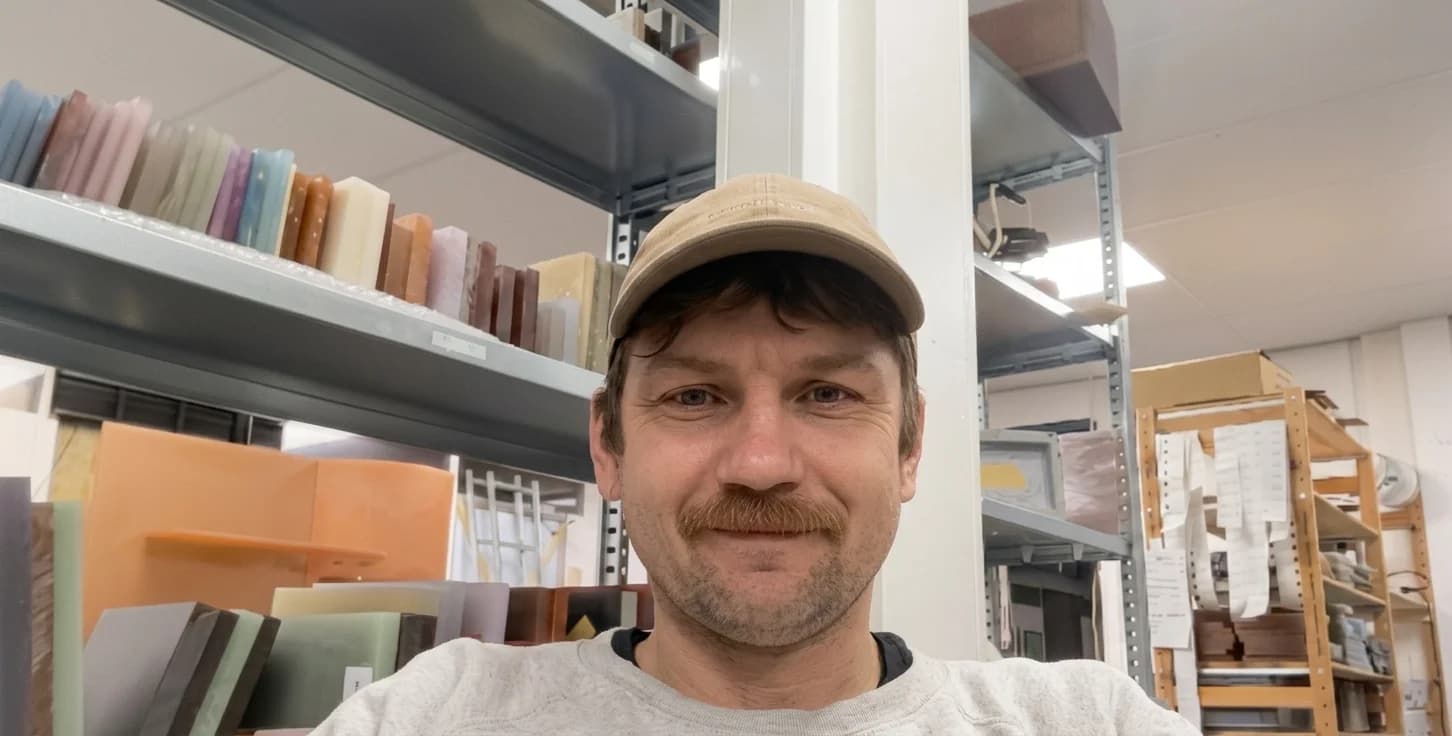
Architecture degree from Melbourne. Studied at TU Delft. Five years designing buildings across Rotterdam and Melbourne. Lost 10 days once because a spec'd material got discontinued — sample vanished, no supplier contact. That happened more than once.
Left architecture in 2023, joined Plasticiet (opens in new tab) making recycled plastic sheets. Same problem from the other side: 200 samples out a month, 80% gone without a trace. Their co-founder said "if only we could attach a code to each sample." So I built it.
Currently serving a select group of material producers hands-on. Every customer gets direct founder access, fast response times, and their feedback shapes the product. The rollout is deliberately small so setup stays simple. I've manufactured material samples myself and watched them vanish into architecture firms.
In the field
Where do they end up? Inspiring projects? Sitting in a drawer?
Most samples won't lead to huge orders, but they should lead to insight.
Know who's scanning, what's ignored, and where to follow up.
What Plasticiet saw
rescans from one architecture firm before Plasticiet knew it was time to follow up.
"We had one architecture firm rescan the same passport 47 times. We knew to follow up, and it converted. That kind of visibility didn't exist for us before."
An architecture firm registered on a Plasticiet passport and kept coming back to the same material. Without the scan trail, it would have looked like silence. With it, the follow-up happened at the right time.
I'll tell you quickly whether SampleSync fits your workflow, where it helps, and where it doesn't.
Current rollout: Live with Plasticiet and being shaped with a small number of material teams.
Best fit: Producers who send repeat samples, care about rescans, and want direct follow-up signals instead of guesswork.
Working style: You talk to me directly, not an account manager. If something matters, it gets discussed in plain English.
How it works
Build the passport, attach the QR code, then watch for real project activity instead of guessing which samples matter.
Create
Add specs, images, render textures, PDFs: whatever your customers need. Each material gets its own branded page. Takes two minutes.
Attach
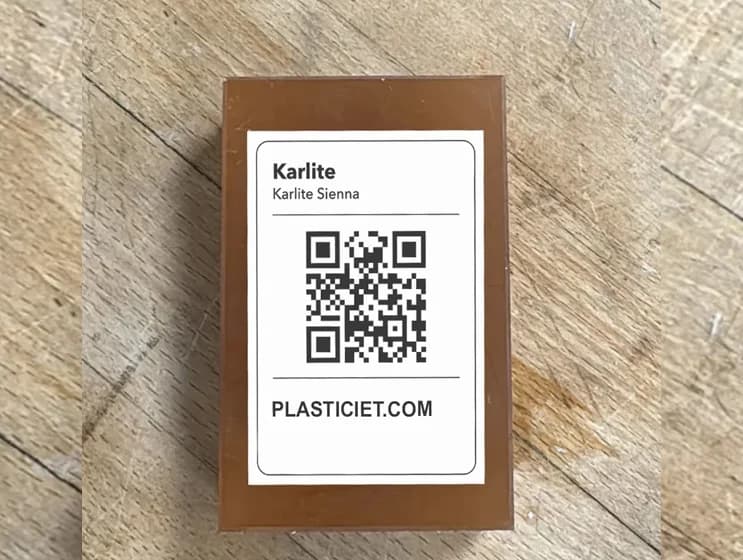
Print the QR code, stick it on. Your label now links to a full product page instead of a sticky note with a phone number.
Capture
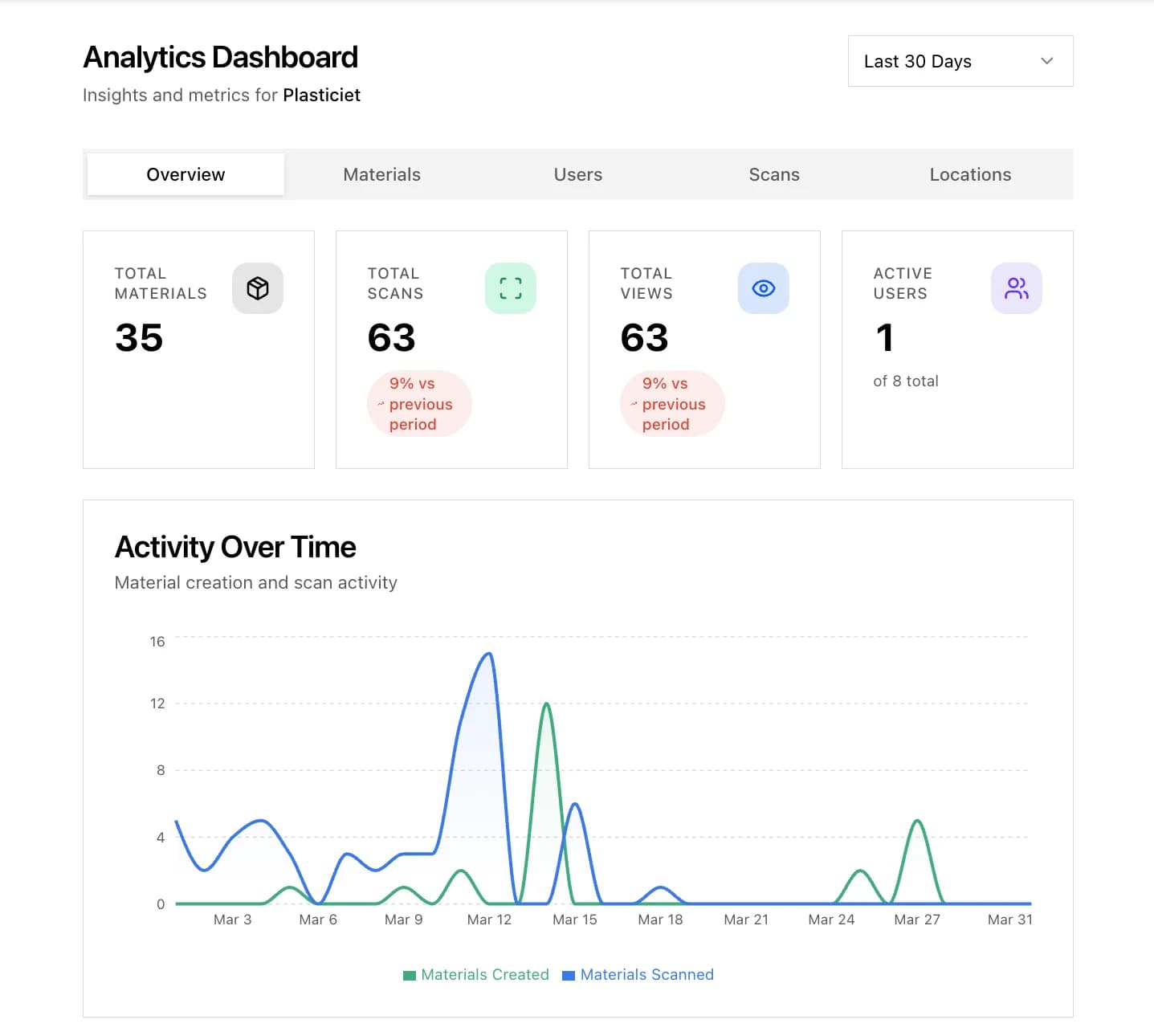
Architects scan to unlock the passport. They register to get in. You get their name, their firm, and a direct contact request when they're ready to talk.
Pricing
Pricing is based on sample volume and team size. Book a call and we'll work out the right setup for you.
Early access
No tiers, no tables. Tell us about your sample programme and we'll put together a plan that fits.
Roadmap
The core is live, from first scan to specified project. What's next connects that signal to the tools your sales team already uses.
Shipped and running
QR sample passports
Branded page per sample with specs, files, and certifications.
Scan & rescan tracking
Every scan logged. See who, when, and how often.
Global location analytics
Map showing where your samples are being engaged.
Scan-triggered email alerts
Get an email when someone scans one of your samples.
Holder registration
Architects register to unlock the full passport. You get their contact details.
Webhook integrations
Fire events to your own systems on scan, register, or request.
Sample lifecycle states
Track each sample from available and dispatched through to specified or archived.
Specification tracking
Mark when a sample converts to a specified project.
Request status management
Mark requests as pending, responded, quoted, won, or lost.
Follow-up automation
Email holders automatically when a sample goes quiet for a set number of days, with an optional second nudge.
CSV export
Download your materials and scan history as CSV.
API key access
Pull materials, scans, and requests through the REST API.
In active testing
Request pipeline
Inbound contact requests land in a managed queue instead of your inbox.
Confirmation emails
Registered holders automatically receive a copy of their own requests.
Request type selection
Requesters specify: information, physical sample, or pricing.
On the roadmap
Slack & Teams notifications
Hot lead alerts directly to the channel your sales team already uses.
White-label QR pages
Remove SampleSync branding. Your domain, your design.
CRM sync
Push scans and requests directly into HubSpot or Salesforce.
Roadmap order reflects current priorities and may shift based on customer feedback. All timelines are estimates.
Questions
Early-stage product, direct answers. If something is narrow, manual, or still being tested, we say that plainly.
Still unclear?
Email a question and get a straight answer instead of a canned nurture sequence.
Final step
I'll tell you whether SampleSync fits your workflow, where it helps, and what I would change first if we worked together.
This conversation is about rollout shape, sample volume, and whether the product is narrow in the right way for your team. If you need a CRM or logistics stack, I'll say that plainly instead of stretching the fit.
What happens next:
I'll look at your current sample flow, where follow-up gets lost, and whether QR-backed rescans would produce signals you'd actually use.
If it is a fit, we keep the rollout small and hands-on. If it isn't, I'll say that plainly.